Orium Studios · Custom software

A CRM that looks like your company. Built in weeks, not quarters.

Your objects, your documents, your brand, and your website feeding it. The screenshots below are one client's real system, not a template with their logo dropped on top.

their CRM / deals
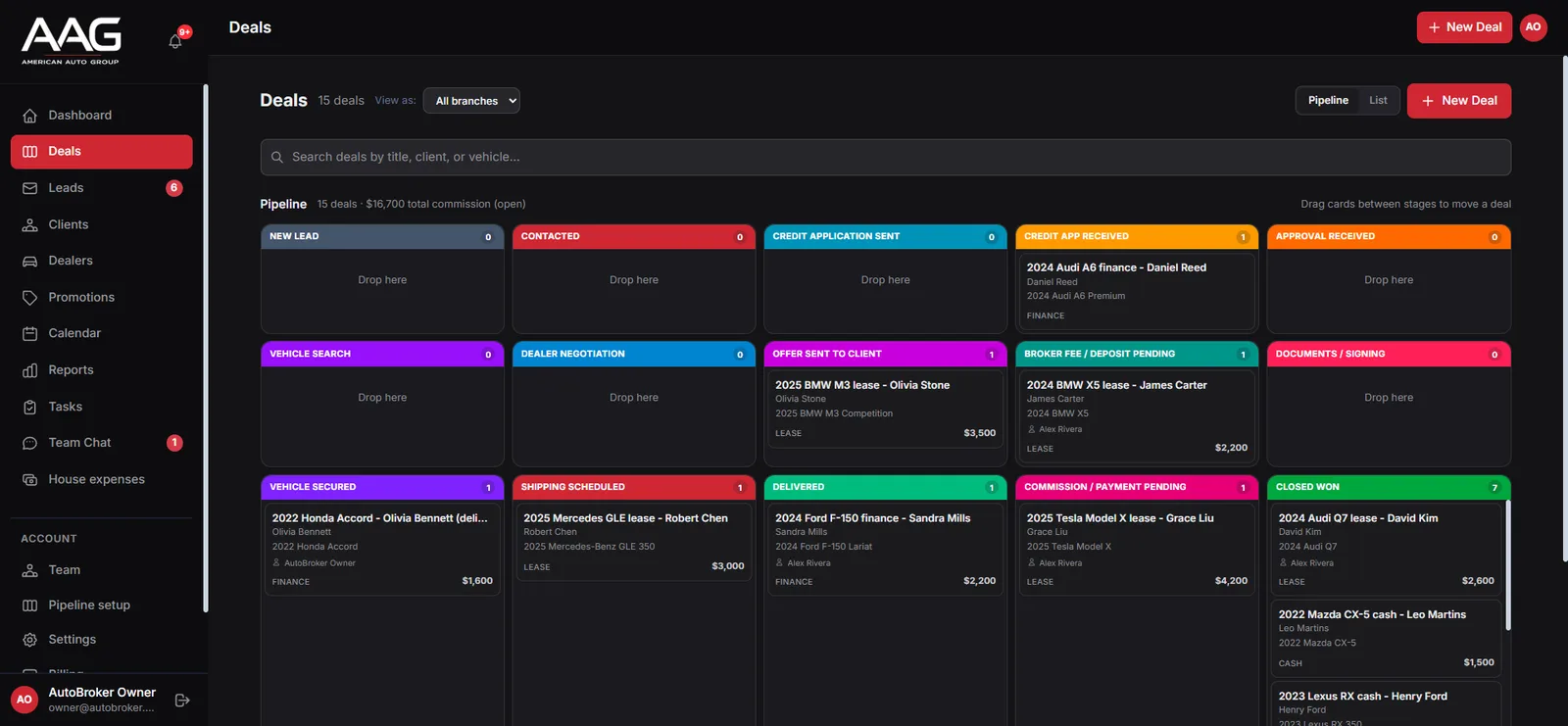
The auto brokerage CRM: a deal pipeline in the client's own red on a near-black shell
Their pipeline. Not ours, not a template.
aagleasing.com
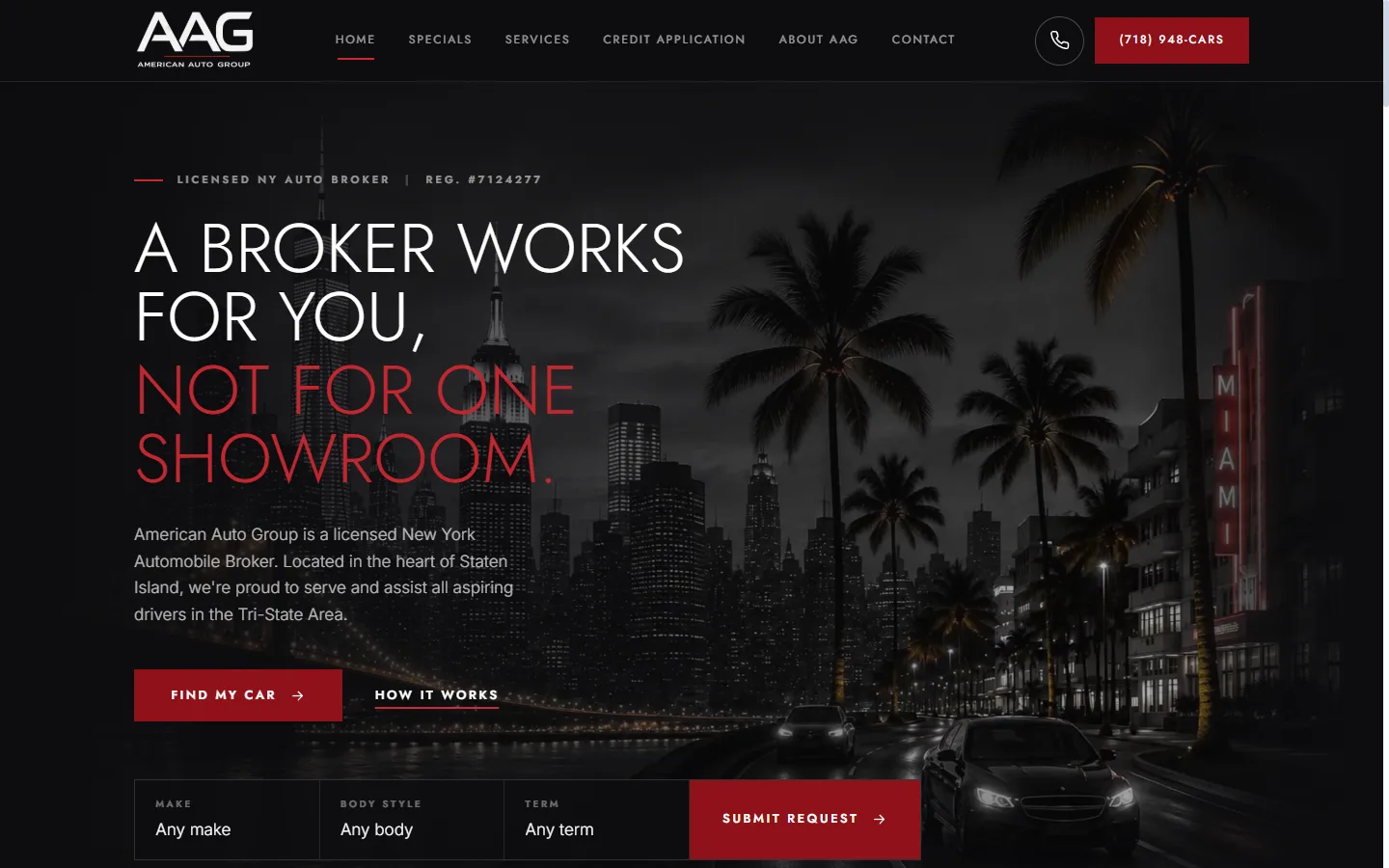
American Auto Group's public website at aagleasing.com
Their public site, same system.
their CRM / promotions
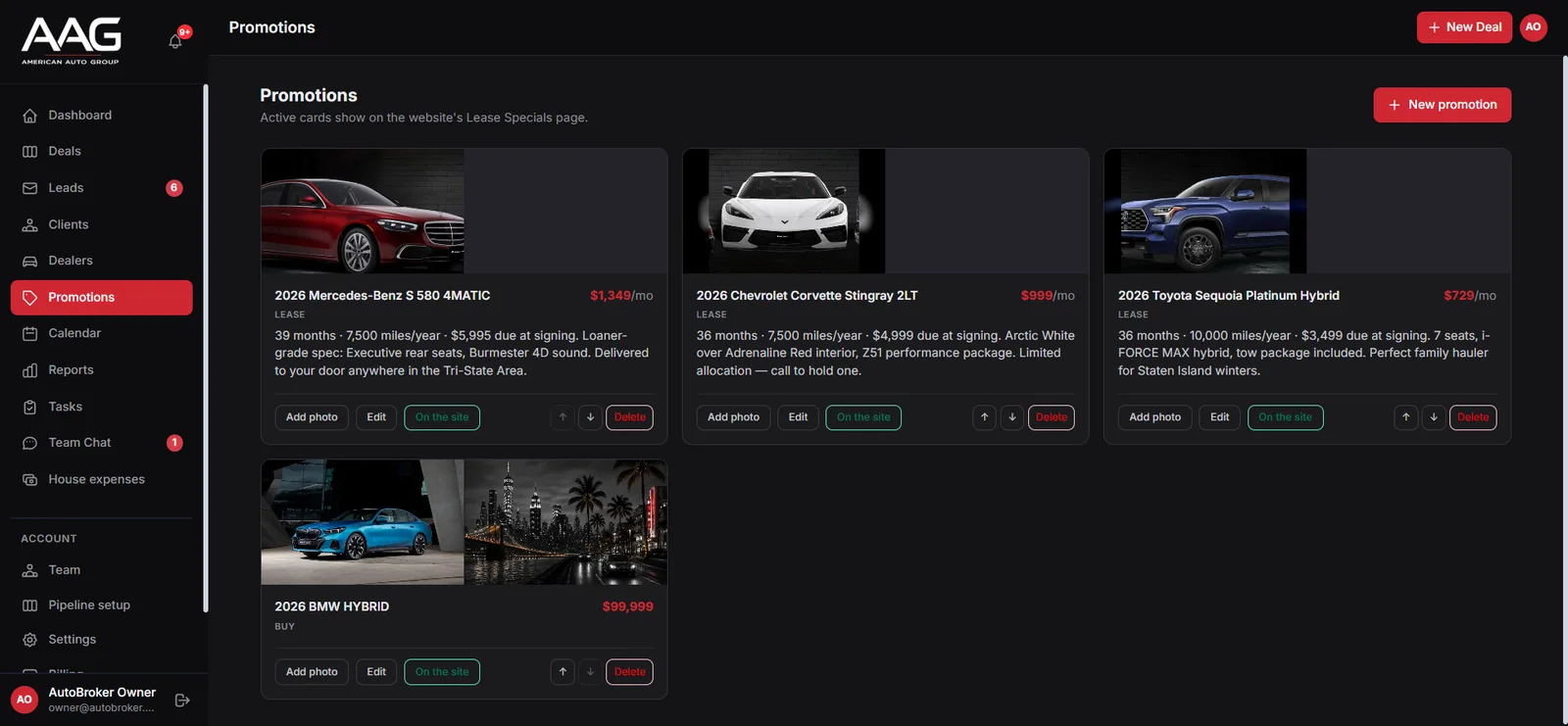
The promotions screen inside the CRM, where offers are authored
Offers are written here.
aagleasing.com/specials
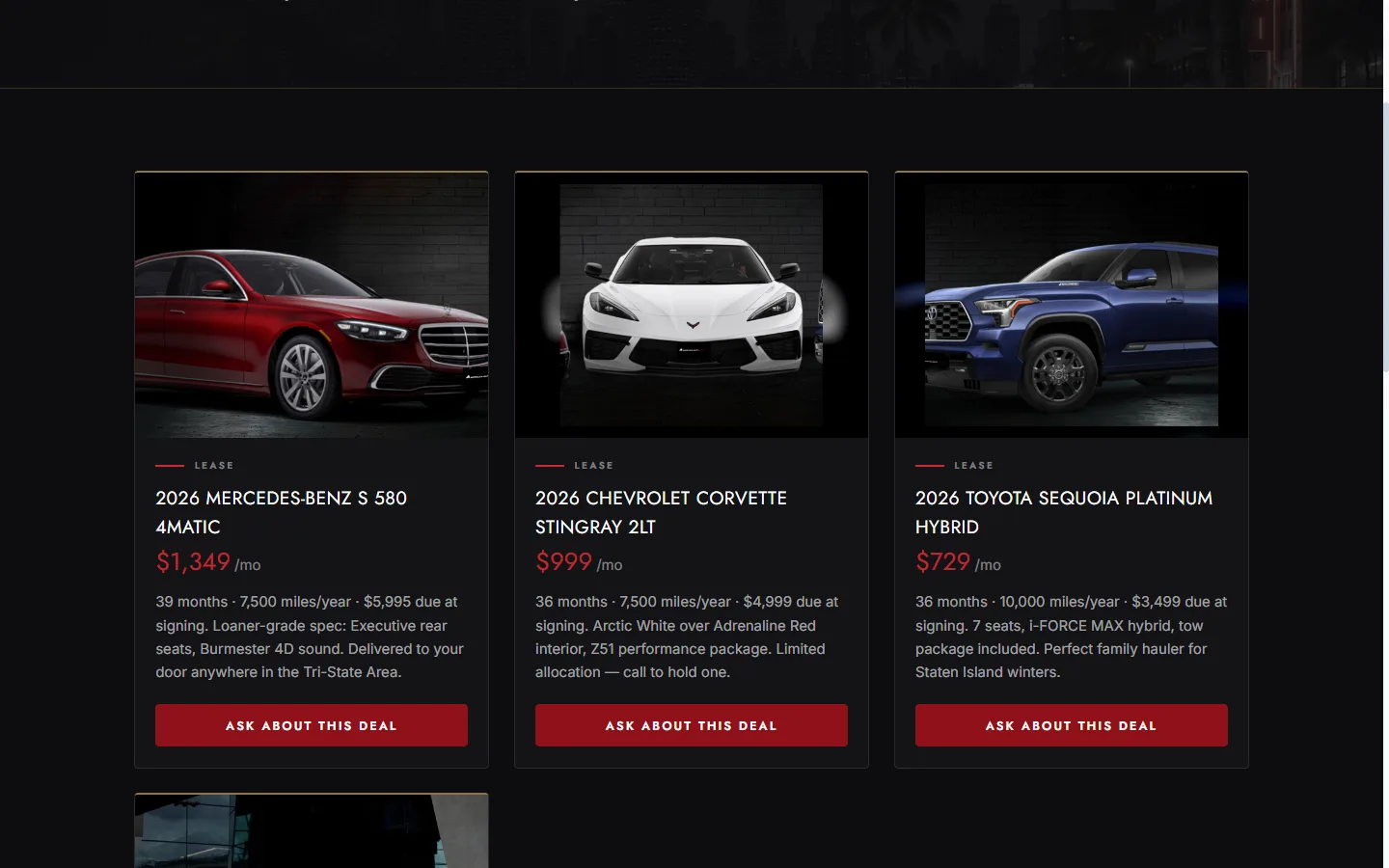
The specials page on the public site, rendered from the CRM's promotions
And appear here, minutes later.
their CRM / deals
The auto brokerage CRM: a deal pipeline in the client's own red on a near-black shell
Their pipeline. Not ours, not a template.
aagleasing.com
American Auto Group's public website at aagleasing.com
Their public site, same system.
their CRM / promotions
The promotions screen inside the CRM, where offers are authored
Offers are written here.
aagleasing.com/specials
The specials page on the public site, rendered from the CRM's promotions
And appear here, minutes later.

Adapting an existing vertical to your business, from $1,500. A build around your own process, from $4,997. Both one time, one-time, plus an ongoing Solo or Team subscription. Priced against a written scope rather than an hourly meter, and anything added later is quoted before it is built.

One core, wearing three different businesses

Pipeline stages, document types, custom fields, terminology and the entire visual theme are configuration, not a rewrite. The red one is a real client.

DraftSentApprovedScheduledPaid
P

Premier Wallcovering

Premium Wallcovering Services

ESTIMATE

#PW-2847

Client:Martinez Residence
Wallpaper · 9 rolls$990.00
Installation labor · 540 ft²$2,700.00
Wall prep & sizing$210.00
Total$3,900.00

Same core, same code, re-skinned and re-configured per business. The red one is a real client.

You probably need this if one of these is true

And if none of them is true, you do not need a custom build yet. Buy something off the shelf and spend the money on getting more customers.

You outgrew the spreadsheet, but every CRM you tried fits badly

You have a real process. The off-the-shelf tool wants you to have a different one. You end up with four fields you never fill in, one you desperately need that does not exist, and a team that quietly goes back to WhatsApp and Excel.

Your pricing math is specific and nothing supports it

Wallpaper is priced by panel and pattern repeat. Auto brokerage is priced by vehicle, dealer and credit tier. Moving is priced by crew hours and truck. Generic line-item estimators cannot hold any of that, so someone recalculates by hand on every job and eventually gets it wrong.

You pay per seat for software most of your team never opens

Installers need three screens. Salesmen need two. Office needs everything. Per-user pricing on a general CRM means you either pay for capability nobody uses or you stop giving field people access at all.

What actually gets built

Not a list of adjectives. Every item below is running in production in at least one live system today, which is why it can be adapted rather than invented.

Your website feeds the CRM

Live on aagleasing.com

An enquiry from your site arrives as a record, not an email. On the brokerage build each offer carries its own id, so when someone asks about one specific car the lead lands attached to that car with its advertised terms.

Contracts signed on your own site

Estimates, contracts, release certificates

The client opens a link on their phone, reads the document, and signs by drawing or typing. Legally binding under the U.S. ESIGN Act and UETA, with signature, IP and timestamp recorded, and a counter-signature from your side.

PDFs in your formats

Your document, your layout

Not our template with your logo. You can upload your own contract, we map where each party signs, and the finished file comes back merged with a signature page appended. Estimates and invoices are generated with your branding and your calculations.

Telephony, integrated per project

Built, then integrated to scope

Click to call from a customer record ships today. Outbound calling with recording, transcription and an automatic summary of each call is built and battle-tested on 652 real calls as our own sales tooling, and gets wired into a build when the work calls for it.

A portal your clients actually open

Running in production

One private link, no login, no app. Payment summary, schedule, live work stages, signed documents and photos. It exists so your phone stops ringing with people asking how it is going.

Security you can put in a contract

DPA included

Social Security numbers encrypted at rest with AES-256-GCM and masked to the last four digits. Revealing one writes an audit record before the data is released. Records isolated per company at the database level. Delivered under a Data Processing Agreement with you as the controller.

Also in every build, because the core already has it:

  • A deal or job pipeline with the stages your business actually uses
  • Role-based access: owner, manager, field worker, salesperson, each seeing only their view
  • Quotes and estimates as branded PDFs, with your calculations built in
  • E-signature that is legally binding under the U.S. ESIGN Act
  • A client portal on a private link, so customers stop calling for status
  • Scheduling and a shared calendar
  • Payments and a financial dashboard: revenue, profit, what is still owed
  • Document storage, with private files behind short-lived signed links
  • Telegram and email notifications on the events that matter
  • Scheduled automations: reminders, follow-ups, nightly syncs

How a build runs

01

Week 0

Discovery call

60 to 90 minutes. We map how the work actually moves through your business today, including the parts that live in someone's head. You get the map whether or not you hire us.

02

Week 1

Scope and price

A written scope: screens, roles, calculations, integrations, and a price for exactly that, starting from $1,500. Not an hourly meter. Anything you decide to add later gets its own number before it is built, so the bill never moves on its own.

03

Weeks 2 to 8

Build on the WallFlow core

We do not start from an empty repository. Auth, roles, PDF generation, e-signature, storage, billing and notifications already exist and are running in production. That is why a custom system ships in weeks instead of quarters.

04

Ongoing

Handover and run

Your team is trained, your data is imported, and the infrastructure is registered in your name. Then it runs, with a subscription for hosting, support and continued work.

Proof, not adjectives

Product we own and run

WallFlow

A live SaaS for wallpaper installation contractors with paying customers: panel-based roll and yardage math, branded PDF quotes, e-signature, installer and salesman portals, scheduling, payments. Everything on this page is built on the same core.

See what it does →

Custom build for a client

AutoBroker CRM

A CRM for an auto brokerage and leasing company in Florida, rebuilt from the WallFlow core around vehicle deals, dealer relationships and credit applications. Social Security numbers encrypted at rest and masked in the interface, row-level company isolation, audit logging on sensitive reads, private document storage, delivered under a Data Processing Agreement with the client owning the infrastructure.

Read the case study →

What it costs

A written scope with a price on it before anything is built. No hourly meter, and no discovery invoice for the privilege of telling us what your business does.

The starting numbers below buy the system you scoped. Businesses almost always think of more once they see it working - a Telegram bot, calling automation, a new document type, automatic sending, an outside integration - and that is normal and usually worth doing. Each one is real engineering, so each gets quoted as its own module, typically $700 to $1,400, and you approve the number before the work starts. Nothing gets added to your invoice quietly, and nothing large gets absorbed for free.

Vertical adaptation

From $1,500

One time. Your brand, vocabulary, math and documents on a vertical that is already running.

Full custom build

From $4,997

One time. Your own objects and process, like the auto brokerage build.

Then, to run it

$99 to $199/mo

Hosting, support and continued work. Solo or Team.

Just want WallFlow set up?

$997

The Launch: a 60-minute setup call, no custom development.

Questions people actually ask

How much does a custom CRM cost for a small business?

There are two doors. Re-fitting an existing vertical to your business - your brand, your vocabulary, your pricing math, your documents - starts at $1,500 one time. A build around your own objects and process starts at $4,997: that is the auto brokerage case, where estimates became deal sheets and materials became vehicles and dealers. Both carry an ongoing subscription of $99 or $199 a month for hosting and support, and most small businesses land between $1,500 and $15,000 depending on how many roles, documents and calculations are involved. A single module scoped on its own, for example a new document type or an outside integration, is typically $700 to $1,400. Agencies quoting six figures for a small-business CRM are usually building from an empty repository; we are not.

How long does it take to build a custom CRM?

Weeks, not quarters. Discovery and scope take about a week. A first working version that your team can log into is usually 2 to 8 weeks after that, depending on scope. It is fast because the build starts from the WallFlow core, which is a live production system with authentication, roles, PDF generation, e-signature, file storage, payments and notifications already solved.

Should a small service business build custom software or buy off the shelf?

Buy off the shelf first, honestly. If a $50 a month product fits your process, use it and spend the money on marketing instead. Custom is worth it when one of three things is true: your pricing math is specific enough that no product supports it, you are paying for seats your team does not use, or the mismatch is costing you real hours every week. If none of those is true yet, wait.

Who owns the code and the data?

You do. The database and hosting accounts are registered in your company's name, and you hold the billing. If you stop working with Orium Studios, the system keeps running and the data stays yours. Work that touches personal data is done under a written Data Processing Agreement with your company as the controller.

Do you only work with wallpaper and painting contractors?

No. WallFlow is the wallpaper vertical and it is where the architecture was proven, but the same core was rebuilt for American Auto Group, an auto brokerage in Staten Island, New York. That is a completely different business with vehicles, dealers and credit applications instead of walls and rolls, and it took about seven weeks. Any service business where work moves through stages and gets quoted, scheduled and invoiced is a fit.

Will it look like my company or like your software?

Like yours. Branding is per tenant and goes further than a logo in the corner: the interface shell, the accent colours, the generated PDFs and the pages your customers open all carry your identity. For the auto brokerage build the palette was not chosen from a picker, it was derived by measuring which colour occupied the most pixel area on the client's existing website, and the resulting dark red now drives the whole system.

What about sensitive data like Social Security numbers or payment details?

In the auto brokerage build, Social Security numbers are encrypted at rest with AES-256-GCM, masked to the last four digits in the interface, and isolated per company with row-level security. Revealing a number or downloading a lender package writes an audit record before the data is released, and the download is blocked if that write fails. The intake form fails closed: without the encryption key it refuses the submission rather than storing anything in the clear. Documents live in private storage behind expiring signed links. One honest limit: the key sits in the application's server environment, so the operator can decrypt. A build where you hold the key is possible and is a larger scope.

Can you integrate with the tools we already use?

Usually yes. Integrations already running in production include Stripe for payments, Google Calendar for scheduling, and Telegram plus email for notifications. If a tool has an API, it can generally be wired in, and it is quoted as its own scope; if it does not, we will tell you that before you pay for anything.

Where are you based?

Orium Studios LLC is based at 2130 Stirling Rd, Hollywood, FL 33020, and works with clients across the United States remotely. Eugene Romanov, who builds and runs it, speaks English, Spanish and Russian.

Start with the discovery call.

60 to 90 minutes mapping how work actually moves through your business. You get the map either way, and a written scope with a price on it if it makes sense to keep going.

Tell me what your business does and what is breaking. No pitch deck, no discovery invoice.

Either an email or a phone number is enough. Nothing is shared with anyone.

Or reach me directly: